- pantouwater
- 0 Comments
- 38 Views
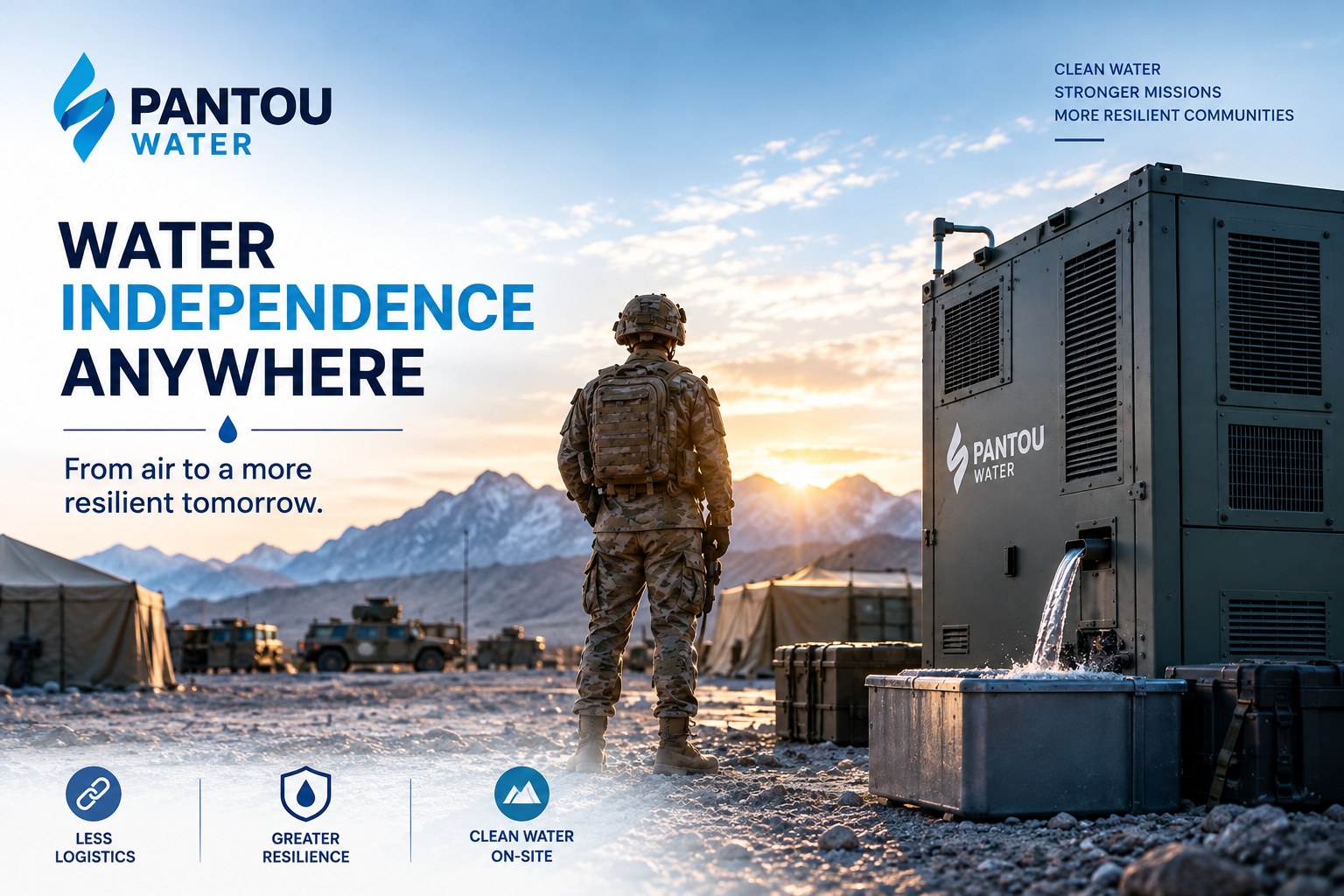
When the U.S. Army invests nearly $50 million in technology designed to produce drinking water directly from the air, it is worth paying attention.
The Army has awarded a $49.898 million IDIQ contract for the research, development, testing, and procurement of Atmospheric Water Generation systems capable of producing potable water on-site in austere and contested environments.
At first glance, this may sound like a specialized military application.
In reality, it reflects a much broader shift in how governments and organizations are beginning to think about water security.
The challenge is no longer only about whether water exists.
It is increasingly about whether safe water is available exactly where and when it is needed.
Water Logistics Are a Strategic Vulnerability
For military operations, water is essential.
Personnel need it for drinking, food preparation, hygiene, medical care, and field operations. But supplying water to remote or difficult environments can create significant logistical challenges.
Traditional water delivery may depend on:
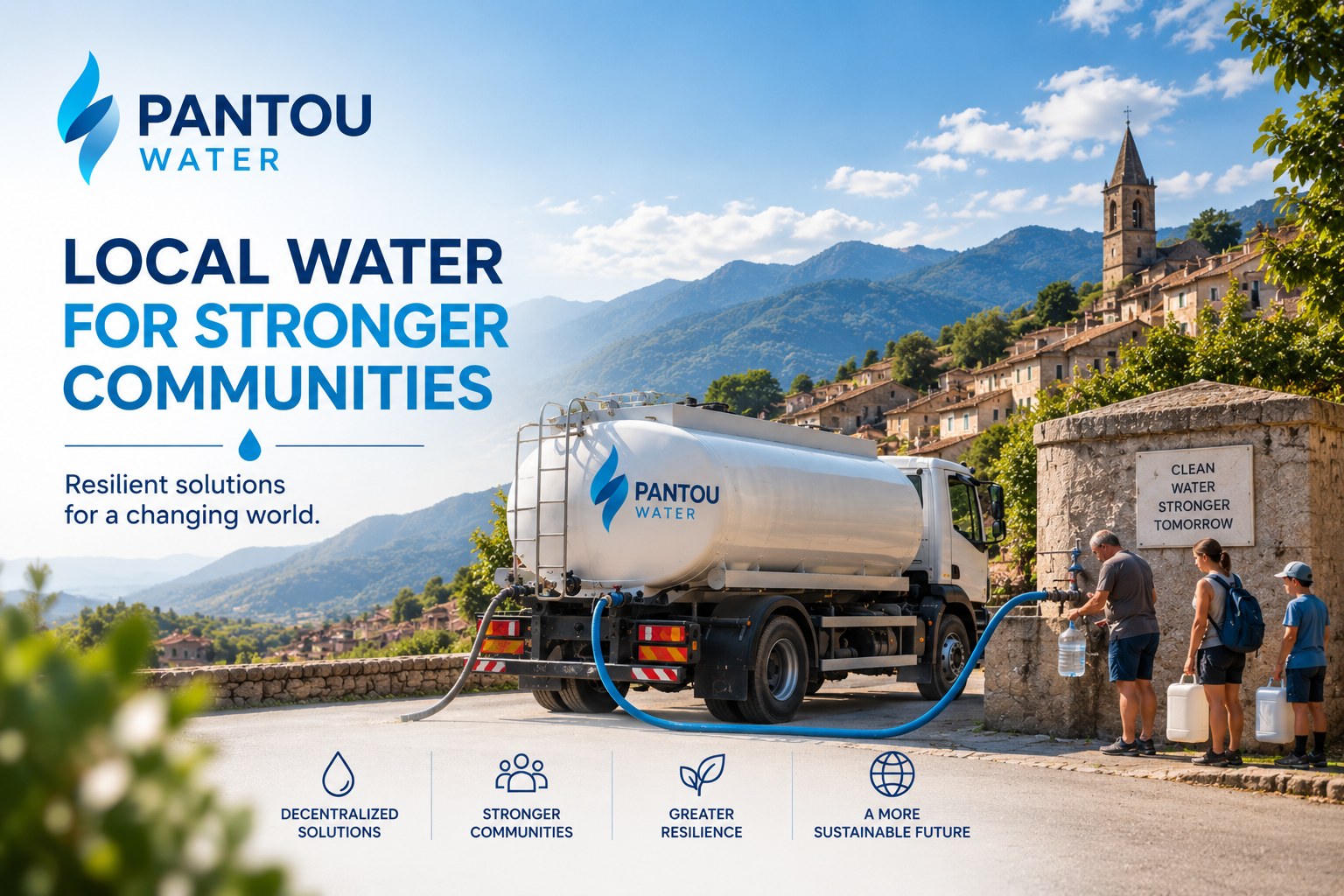
- Tanker trucks
- Bottled-water shipments
- Reliable transportation routes
- Storage infrastructure
- Centralized water systems
Each of these introduces a point of dependency.
In a remote or contested environment, that dependency can quickly become a vulnerability.
A delivery route can be disrupted.
A tanker can be delayed.
Stored water can run low.
Infrastructure can fail.
That is why the ability to produce potable water directly at the point of need is so strategically important.
Why Atmospheric Water Generation Changes the Equation
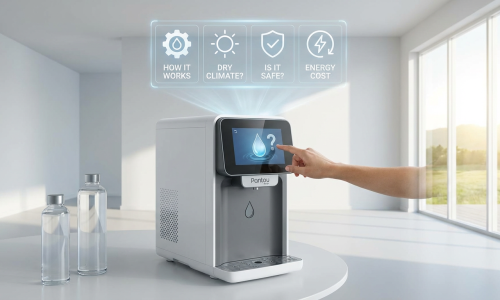
Atmospheric Water Generation, or AWG, uses moisture already present in the air as a water source.
Instead of transporting water over long distances, an AWG system produces water locally.
That changes the traditional logistics model.
Rather than asking:
“How do we move enough water to this location?”
the question becomes:
“How much water can we produce here?”
For military applications, that can mean reduced dependence on external supply chains and more operational flexibility.
For civilian applications, the implications are just as significant.
The Bigger Lesson: Water Security Is About Independence
The U.S. Army’s interest in water-from-air technology highlights an important principle:
Water security is not only about abundance. It is about independence and resilience.
A location may be surrounded by water resources and still be vulnerable if access depends entirely on infrastructure that can fail.
The same principle applies to:
- Remote communities
- Emergency shelters
- Industrial camps
- Disaster-response operations
- Off-grid facilities
- Hotels and eco-lodges
- RV and outdoor users
- Municipal backup systems
In every case, decentralized water production can provide an additional layer of resilience.
Water Does Not Always Need to Travel Hundreds of Kilometres
Traditional water systems often rely on transportation.
Water may move through pipelines from distant reservoirs, be pumped from underground sources, or be delivered by truck to locations where infrastructure is limited.
This model has supported modern communities for decades.
But transportation creates cost, energy consumption, and dependency.
The farther water has to travel, the more infrastructure is required.
Atmospheric water generation introduces another possibility:
produce part of the water supply closer to the point of use.
This does not eliminate the need for municipal systems, groundwater, reservoirs, or transported water.
It adds another option.
And in resilience planning, having more options matters.
Why Low-Humidity Performance Is Important
Not all Atmospheric Water Generators perform equally.
Many conventional systems rely on cooling air below its dew point to condense moisture. These systems can work well in warm and humid environments but may become less efficient as humidity drops.
That can be a serious limitation for military, remote, or off-grid use.
A system designed for deployment across different climates needs to perform under more challenging environmental conditions.
This is one reason adsorption-based water harvesting is attracting growing attention.
Instead of relying only on conventional condensation, adsorption systems use specialized materials to capture moisture from the air and release it in a controlled process.
At Pantou Water, this is a central focus of our technology development.
Decentralized Water Production Can Reduce the Logistics Burden
Consider a temporary military base, remote worksite, or emergency-response camp.
If drinking water must be transported continuously, every litre has a logistics cost.
Someone must source it, package or store it, transport it, unload it, and manage the supply.
The more remote the site, the greater that burden becomes.
Producing even part of the required water locally can help reduce:
- Transportation demand
- Fuel consumption
- Storage requirements
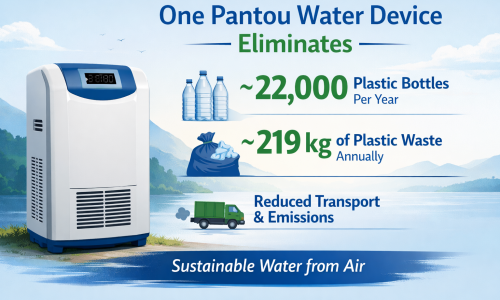
- Plastic bottle use
- Dependence on vulnerable routes
- Supply interruptions
For military operations, this can improve mission readiness.
For commercial and community applications, it can improve cost efficiency and resilience.
Disaster Response Is Another Natural Application
The same conditions that make AWG relevant to military operations often exist after natural disasters.
Wildfires, floods, earthquakes, storms, and infrastructure failures can interrupt centralized water systems.
In these situations, people may still have access to electricity from temporary generators or renewable systems but no reliable water connection.
Portable or decentralized water generation can provide an important backup layer.
Potential applications include:
- Emergency shelters
- Field hospitals
- Evacuation centres
- Temporary housing
- Remote communities
- Disaster-response command centres
The ability to generate water on-site can be especially valuable during the critical period before conventional infrastructure is restored.
Industrial and Remote Operations Face Similar Challenges
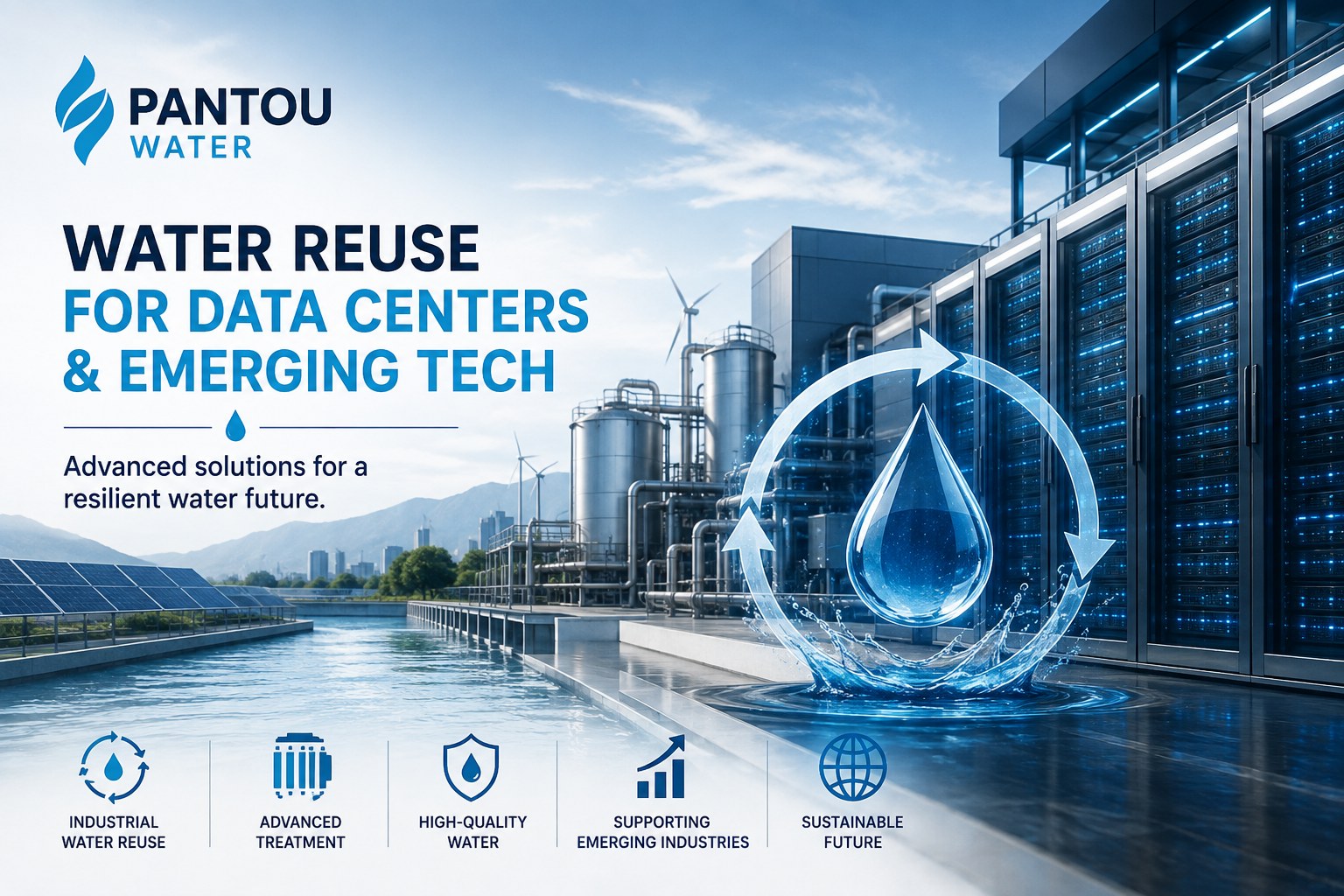
Mining sites, construction camps, energy projects, forestry operations, and other remote facilities frequently operate far from established infrastructure.
Water may need to be trucked in regularly.
This can be expensive, especially when road conditions are poor or distances are long.
Decentralized water generation can help reduce the frequency of deliveries and provide additional security if supply routes are interrupted.
For industries increasingly focused on sustainability and operational resilience, this becomes more than a convenience.
It becomes part of infrastructure planning.
Atmospheric Water Generation Is Not a Replacement for Every Water System
It is important to keep the role of AWG in perspective.
Atmospheric water generation will not replace every municipal water system, reservoir, well, or treatment plant.
Large cities require enormous quantities of water that are best served by large-scale infrastructure.
But resilience does not require replacing existing infrastructure.
It requires strengthening it.
AWG can function as a supplementary or backup source, particularly in places where traditional water access is expensive, unreliable, or vulnerable.
That makes the technology particularly relevant for distributed and remote applications.
Energy Efficiency Will Determine Real-World Success
Water-from-air technology still faces an important challenge: energy.
Extracting water from atmospheric moisture requires power.
A practical AWG must therefore balance water production with energy consumption.
This becomes even more important in off-grid and military applications where electricity itself may be limited.
Future systems will need to integrate efficiently with:
- Solar power
- Battery storage
- Microgrids
- Waste heat
- Smart energy-management systems
Improving energy efficiency is therefore just as important as increasing water production.
At Pantou Water, both low-humidity performance and energy efficiency are key priorities in the development of our atmospheric water generation platform.
What Military Adoption Could Mean for the Wider Market
Military procurement has historically helped accelerate many technologies that later became widely used in civilian markets.
GPS is perhaps the most familiar example.
The same dynamic can occur in water technology.
Military investment can help advance:
- System reliability
- Durability
- Energy efficiency
- Portability
- Water-quality validation
- Remote monitoring
- Field performance
As these technologies mature, they can become increasingly practical for commercial, humanitarian, and residential applications.
That is why this investment matters beyond defence.
It signals growing recognition that decentralized water production is becoming a serious infrastructure technology.
Water Resilience Is Becoming a Global Priority
Climate change, drought, population growth, infrastructure aging, and emergency events are increasing pressure on water systems worldwide.
At the same time, more organizations are recognizing the risks of depending entirely on centralized supply networks.
Future water systems will likely be more diversified.
They may combine:
- Municipal infrastructure
- Groundwater
- Water recycling
- Rainwater harvesting
- Desalination
- Local storage
- Atmospheric Water Generation
Each source provides a different layer of resilience.
The goal is not to rely entirely on one system.
The goal is to ensure that when one source is disrupted, another can help maintain access.
The Future of Water May Be Closer Than We Think
The U.S. Army’s investment in Atmospheric Water Generation illustrates a larger shift in thinking.
Water does not always need to be transported from somewhere else.
Sometimes, the source is already present in the air around us.
For military operations, that can mean greater independence from vulnerable supply routes.
For communities and businesses, it can mean more reliable access during drought, disaster, or infrastructure disruption.
For remote and off-grid users, it can mean greater freedom.
At Pantou Water, we believe decentralized water production will become an increasingly important part of the global water-resilience landscape.
Because the future of water security is not only about finding more water.
It is about producing safe water where it is needed, when it is needed.
About Pantou Water
Pantou Water is developing next-generation Atmospheric Water Generation technology designed to capture moisture from the air and convert it into clean drinking water. Our platform is being developed with a focus on low-humidity performance, energy efficiency, portability, and decentralized applications.
Potential applications include remote communities, emergency response, industrial sites, hospitality, outdoor users, and infrastructure-constrained environments.
Pantou Water — Water from Air. Water Where You Need It.