- pantouwater
- 0 Comments
- 146 Views
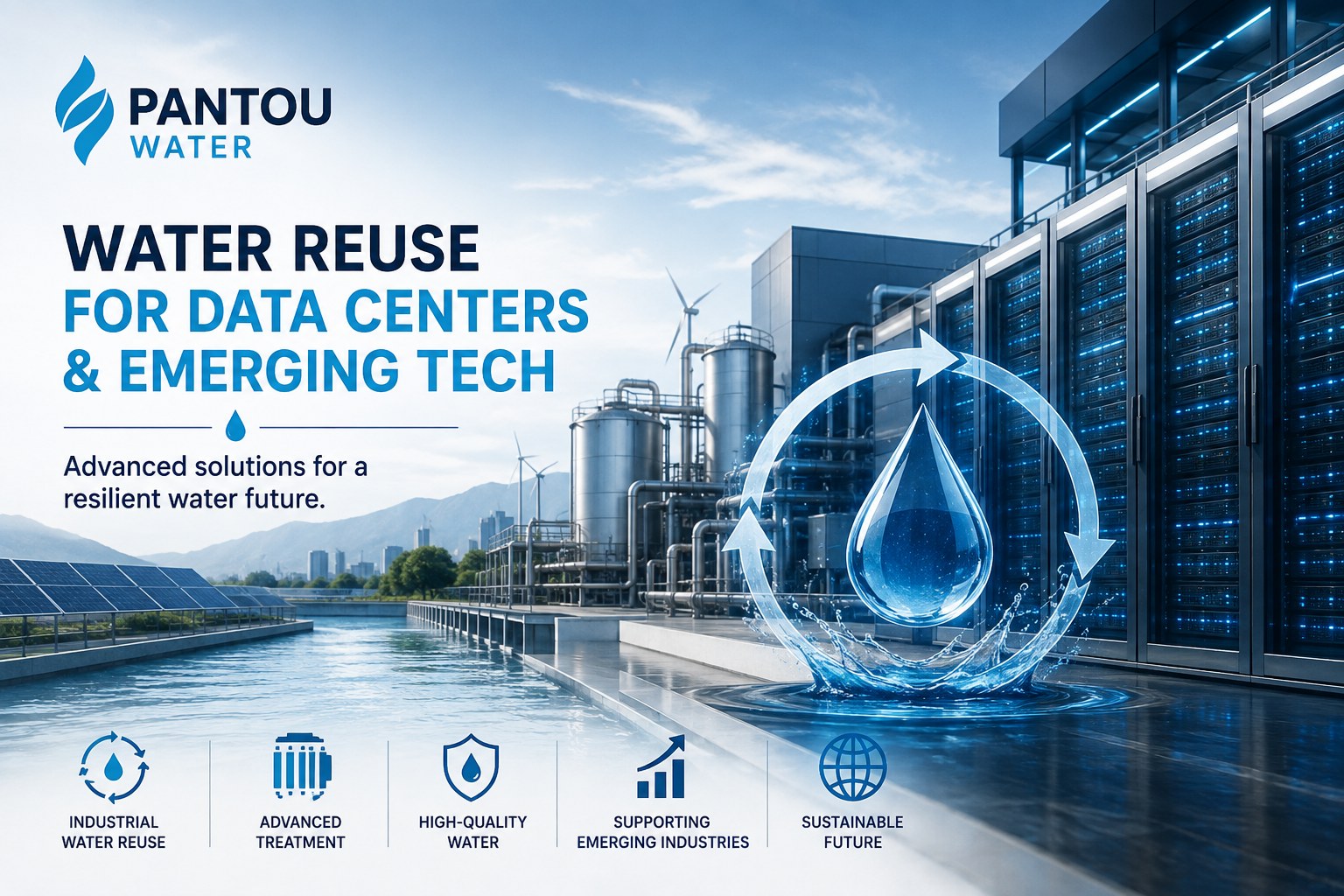
Artificial intelligence, cloud computing, semiconductor manufacturing, and advanced electronics are reshaping the global economy.
But behind this digital transformation is a physical resource that receives far less attention:
water.
Data centers require water for cooling. Semiconductor facilities need extremely high-quality water for manufacturing. Advanced industrial sites depend on reliable water systems for processing, cleaning, and temperature control.
As these sectors grow, their demand for water is becoming a strategic infrastructure issue.
The next generation of technology will therefore require a next generation of water infrastructure as well.
Why Emerging Technology Is Increasing Water Demand
Digital infrastructure may appear virtual, but the facilities supporting it are highly physical.
Large data centers contain thousands of servers that generate significant heat. Cooling systems must operate continuously to maintain safe temperatures and protect equipment.
Semiconductor manufacturing creates another challenge. Chip fabrication involves highly controlled processes where water quality is critical, particularly during cleaning and rinsing stages.
As investment in AI infrastructure, data centers, and advanced manufacturing continues to expand, more regions are having to consider whether existing water systems can support this growth without creating additional pressure on communities and ecosystems.
The question is no longer simply:
Do we have enough water for new industrial development?
It is increasingly:
How can we use the same water more intelligently?
From Freshwater Consumption to Water Reuse
For many industrial facilities, water has traditionally followed a relatively linear model.
Water is withdrawn from a municipal system, river, reservoir, or groundwater source, used once, treated, and then discharged.
Water reuse changes that model.
Instead of treating used water as waste, facilities can recover it, treat it to the required quality, and return it to the operational cycle.
Depending on the application, reused water may support:
- Cooling systems
- Industrial processing
- Cleaning operations
- Utility water
- Irrigation
- Other non-potable uses
This reduces the amount of new freshwater that must be withdrawn from external sources.
For large industrial users, even partial reuse can significantly improve long-term water resilience.
Why Data Centers Are Strong Candidates for Water Reuse
Water consumption in data centers is closely connected to cooling design.
Facilities using evaporative or water-assisted cooling may consume substantial amounts of water, particularly in hot climates or during periods of high computational demand.
One way to reduce freshwater dependency is to replace potable water with alternative sources wherever technically feasible.
Potential sources include:
- Reclaimed municipal wastewater
- Treated industrial wastewater
- Captured rainwater
- Recycled cooling water
- Other locally available non-potable supplies
By integrating water reuse into cooling infrastructure, data centers can reduce competition for drinking-quality water while maintaining reliable operations.
This approach is particularly important in regions already facing drought, infrastructure constraints, or rapid population growth.
Semiconductor Manufacturing Requires a Different Level of Water Quality
Not every reuse application has the same requirements.
Semiconductor fabrication is one of the clearest examples.
Modern manufacturing processes require extremely clean water to prevent contamination during sensitive production stages. Water may need to undergo multiple treatment processes before reaching the purity required by the facility.
This can include technologies such as:
- Membrane filtration
- Reverse osmosis
- Ion exchange
- Advanced oxidation
- UV treatment
- Polishing systems
- Real-time quality monitoring
The objective is not simply to recycle water.
It is to create a controlled treatment process capable of converting lower-quality water into a reliable industrial resource.
As water scarcity grows, advanced treatment systems will become increasingly important to the future of high-tech manufacturing.
South Korea Offers a Glimpse of the Direction of Travel
Large technology economies are already beginning to treat industrial water reuse as strategic infrastructure.
South Korea, for example, has been advancing major water-reuse initiatives connected to its semiconductor sector.
The logic is straightforward.
Semiconductor manufacturing is economically important, but it also requires large and reliable volumes of high-quality water. Rather than meeting all future demand through additional freshwater extraction, water reuse can help create a more sustainable long-term supply.
This approach reflects a broader trend likely to spread across other technology hubs.
As industries become more water-intensive, governments and companies will increasingly need to build circular water systems alongside energy and digital infrastructure.
Water Reuse Can Improve Industrial Resilience
Reducing freshwater demand is only one benefit.
Water reuse can also improve operational resilience.
Industrial facilities face multiple water-related risks, including:
- Drought
- Municipal restrictions
- Infrastructure failures
- Rising water costs
- Supply interruptions
- Regulatory pressure
- Competition with surrounding communities
A facility that depends entirely on one external water source is exposed to all of those risks.
A facility that combines municipal supply, recycled water, storage, rainwater capture, and other decentralized sources has a much stronger water portfolio.
In infrastructure planning, redundancy matters.
Water should be no different.
Decentralized Water Systems Can Add Another Layer
Centralized water reuse projects can operate at very large scales, but not every facility or application requires a massive infrastructure project.
Decentralized water technologies can complement those systems by producing, treating, or recovering water closer to the point of use.
Examples include:
- Modular filtration systems
- Local wastewater recycling
- Rainwater harvesting
- Closed-loop process-water systems
- Atmospheric Water Generation
These technologies can be particularly valuable for smaller facilities, remote sites, backup applications, and operations where additional water security is required.
Where Atmospheric Water Generation Fits
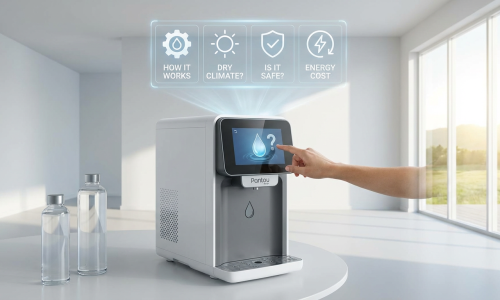
Atmospheric Water Generation, or AWG, extracts moisture from the air and converts it into usable water.
For large semiconductor fabrication facilities or hyperscale data centers, atmospheric water generation is unlikely to replace the enormous volumes provided by municipal or industrial-scale reuse infrastructure.
Its potential role is different.
AWG can provide an additional decentralized water source for selected applications.
Potential uses could include:
- Drinking water for employees
- Backup water supply
- Remote technical facilities
- Emergency response
- Smaller industrial sites
- Supplementary water production
- Facilities with unreliable local water infrastructure
The value of atmospheric water generation lies in diversification.
A more resilient facility does not necessarily rely on one water technology. It combines multiple sources based on cost, quality requirements, climate, and operational risk.
The Importance of Matching Water Quality to Its Use
One of the most important principles in sustainable water management is simple:
Not every process needs drinking-quality water.
Using high-quality municipal freshwater for applications that could operate with recycled or reclaimed water can be inefficient.
A smarter system creates different water streams for different purposes.
For example:
- Reclaimed water may be suitable for cooling.
- Highly purified water may be required for semiconductor production.
- Atmospheric water may support potable or backup needs.
- Rainwater may be used for landscaping or utility applications.
This type of fit-for-purpose water management reduces unnecessary treatment and preserves higher-quality resources for applications where they are truly required.
Smart Water Infrastructure Needs Better Monitoring
Advanced water systems also require better data.
Facilities need to understand:
- How much water they consume
- Which processes consume it
- How much can be recovered
- Water quality at different stages
- Treatment efficiency
- Leak rates
- Seasonal variation
- Cost per unit of water
- Dependence on external supplies
Real-time sensors and digital monitoring can make these systems significantly more efficient.
Artificial intelligence itself can also help optimize water use by identifying abnormal consumption, predicting maintenance needs, and adjusting treatment or cooling systems based on operational conditions.
The relationship between AI and water is therefore more complex than simple consumption.
AI can increase water demand—but it can also help manage water systems more intelligently.
Industrial Growth Should Not Mean Unlimited Freshwater Use
The rapid expansion of AI infrastructure and advanced manufacturing presents major economic opportunities.
But growth cannot depend indefinitely on withdrawing larger volumes of freshwater from stressed local systems.
Communities, industries, and ecosystems all depend on the same resource.
Future industrial development will need to demonstrate that it can grow while reducing pressure on shared water supplies.
That means moving from a model of take, use, discharge toward one based on reuse, recovery, diversification, and resilience.
A New Water Strategy for the Technology Economy
The technology sector has transformed computing, communications, manufacturing, and energy management.
Water infrastructure now needs a similar transformation.
The future could combine:
- Municipal water reuse
- Industrial wastewater recycling
- Closed-loop cooling
- Advanced purification
- Rainwater harvesting
- Digital monitoring
- Watershed investment
- Decentralized water generation
No single solution will be sufficient for every site.
But together, these technologies can create industrial systems that are less dependent on freshwater and more resilient to climate and infrastructure risks.
Looking Ahead
The digital economy will continue growing.
Artificial intelligence will continue demanding more computing power.
Semiconductor production will continue expanding.
Data centers will become larger and more numerous.
If water infrastructure does not evolve alongside them, water availability could become a serious constraint on technological growth.
The opportunity is to act before that happens.
By treating wastewater as a resource, matching water quality to its intended use, and integrating alternative sources into facility design, technology companies can reduce freshwater demand while strengthening operational resilience.
At Pantou Water, we believe the future of water will be increasingly decentralized, diversified, and intelligent.
Because the next generation of technology infrastructure should not only be more powerful.
It should also be more water-resilient.
About Pantou Water
Pantou Water is developing energy-efficient Atmospheric Water Generation technology designed to produce clean water directly from air humidity. The company is exploring decentralized water solutions for applications including off-grid users, remote communities, emergency response, hospitality, industrial facilities, and next-generation infrastructure.
Pantou Water — Water Security. Made Possible.