- pantouwater
- 0 Comments
- 149 Views
Artificial intelligence is changing the physical footprint of the digital world.
The rise of AI, cloud computing, and high-performance computing is driving rapid expansion of data centres around the world. These facilities are essential to modern digital infrastructure, but they also consume significant amounts of energy and water.
That creates a new question for the technology sector:
Can data centres move beyond simply reducing water consumption—and begin contributing positively to local water security?
The idea of a water-positive data centre is becoming increasingly important as communities, governments, and technology companies look for more sustainable ways to support digital growth.
Why Data Centres Use So Much Water
Servers generate heat continuously.
As computing power increases, so does the need for cooling. Many data centres rely on water-based cooling systems because water can remove heat efficiently and help maintain stable operating temperatures.
The challenge is scale.
A single data centre may contain thousands of servers operating around the clock. As facilities grow larger and more computationally intensive, cooling demand rises accordingly.
At the same time, many data centres are located in regions where local water systems are already under pressure from population growth, industrial demand, drought, climate change, and aging infrastructure.
This makes water use an increasingly important consideration when new digital infrastructure is planned.
Using Less Water Is Important—but It May Not Be Enough
The first step toward better water management is efficiency.
Data centres can reduce freshwater consumption through smarter cooling systems, better heat management, and improved operational practices.
But efficiency alone may eventually reach practical limits.
A truly resilient strategy asks a broader question:
How can a data centre reduce its dependence on freshwater while also strengthening the water system around it?
That is where the concept of water-positive infrastructure becomes relevant.
What Does “Water-Positive” Mean?
A water-positive strategy aims to return, restore, or replenish more water than an organization consumes.
For a data centre, that could mean combining several approaches rather than relying on a single technology.
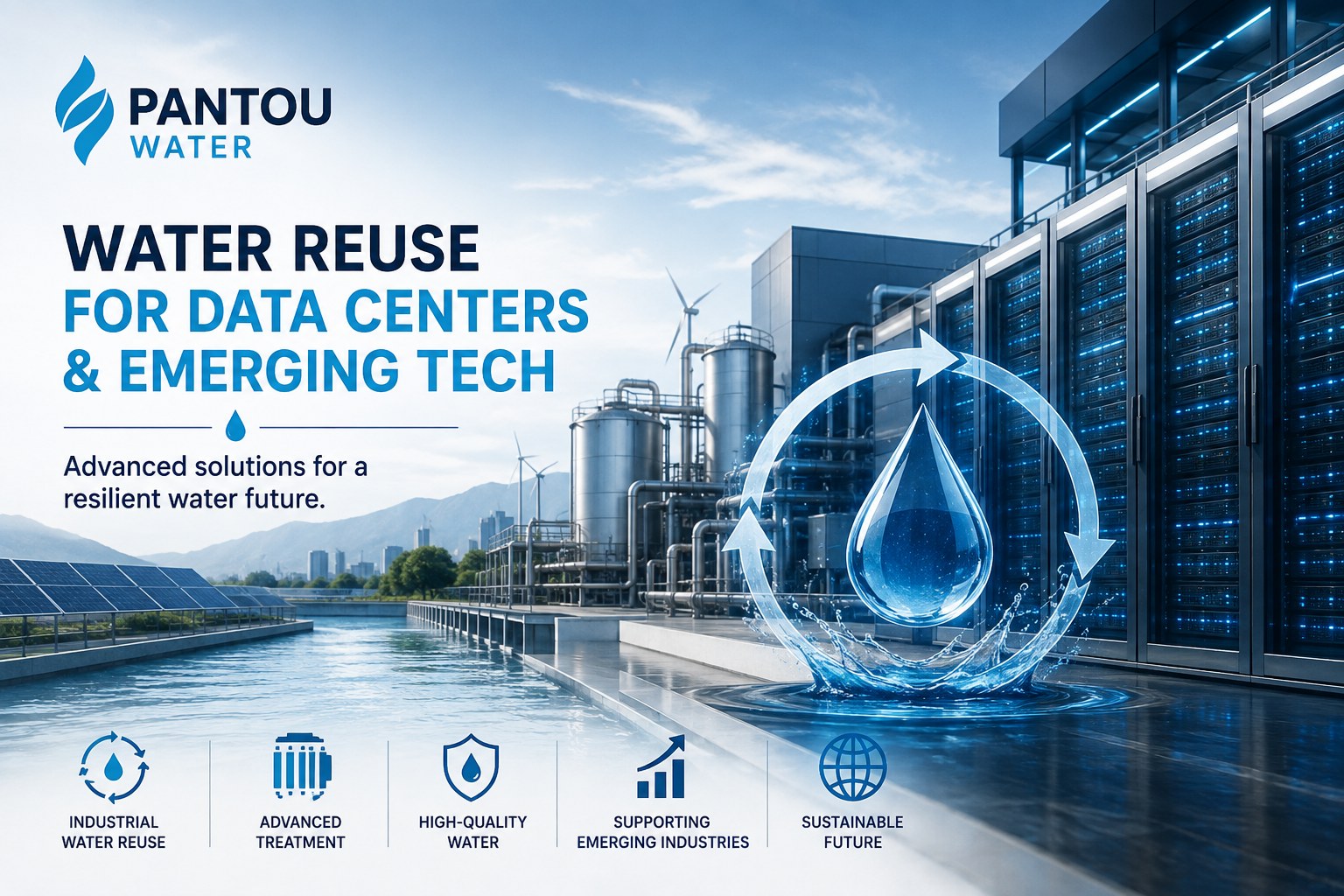
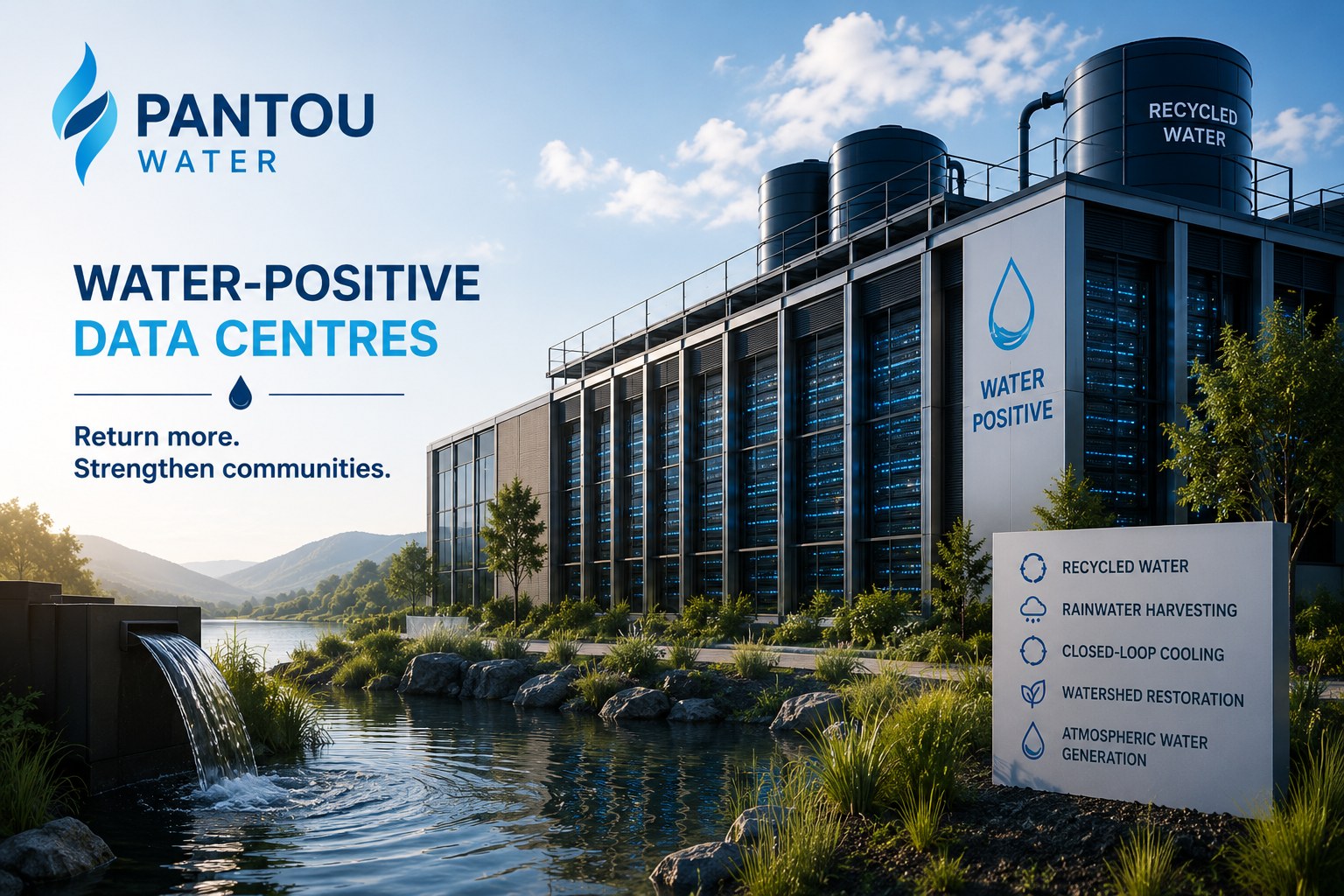
A water-positive facility might integrate recycled or reclaimed water for cooling, rainwater harvesting and storage, closed-loop cooling systems, investment in local watershed restoration, improved water-use monitoring, alternative water sources, and atmospheric water generation.
The goal is not simply to consume less.
The goal is to create a net positive contribution to local water resilience.
Recycled and Reclaimed Water
One of the most immediate opportunities is replacing potable freshwater with recycled or reclaimed water wherever possible.
Cooling systems generally do not require drinking-quality water.
Municipal wastewater, treated industrial water, or other reclaimed sources can sometimes provide suitable alternatives.
This approach reduces competition between industrial facilities and communities for high-quality freshwater resources.
It can also help create a more circular water economy in which water is used multiple times before being discharged.
Rainwater Harvesting
Large data centre campuses often have significant roof and paved surface areas.
These surfaces create an opportunity to capture rainfall rather than allowing it to immediately enter stormwater systems.
Collected rainwater can potentially be stored and used for cooling, landscaping, cleaning, and other non-potable applications.
In regions with seasonal rainfall, storage systems can help reduce pressure on municipal supplies during periods of higher demand.
Closed-Loop Cooling Systems
Cooling technology itself is also evolving.
Closed-loop systems circulate the same water repeatedly rather than continuously consuming and discharging new water.
Combined with advanced heat exchangers, sensors, and intelligent control systems, these approaches can dramatically improve water efficiency.
AI can even become part of the solution.
Machine learning can optimize cooling performance in real time by adjusting equipment based on temperature, humidity, workload, and energy conditions.
In other words, the same AI infrastructure that is increasing water demand may also help manage water more intelligently.
Investing in Local Watersheds
Water-positive infrastructure should not stop at the property boundary.
Data centre operators can also invest directly in the health of surrounding watersheds.
Potential initiatives include wetland restoration, reforestation, riverbank stabilization, groundwater recharge projects, conservation programs, and agricultural water-efficiency initiatives.
Healthy watersheds play a critical role in storing, filtering, and replenishing freshwater resources.
Supporting those systems can create long-term environmental benefits that extend well beyond the facility itself.
Transparent Water Reporting Matters
Water sustainability depends on measurement.
Data centre operators should understand how much water they consume, where that water comes from, how much is reused, how much is returned, how consumption changes seasonally, and whether operations are affecting surrounding communities.
Transparent reporting allows governments, investors, customers, and residents to better understand the environmental impact of digital infrastructure.
It also creates accountability.
A company cannot credibly claim to be water-positive without measuring the broader water cycle associated with its operations.
Could Atmospheric Water Generation Play a Role?
Atmospheric Water Generation, or AWG, offers another potential source of decentralized water.
AWG systems extract moisture from the air and convert it into usable water.
Rather than drawing directly from rivers, reservoirs, or groundwater, these systems access atmospheric humidity as an alternative water source.
For data centres, atmospheric water generation could potentially support selected applications such as backup water supply, remote facilities, emergency operations, supplemental water requirements, staff drinking water, or locations with constrained water infrastructure.
The technology becomes particularly interesting when integrated with renewable electricity, waste heat recovery, and intelligent water-management systems.
AWG is unlikely to replace every water source required by a very large data centre. Its potential value lies in diversification and resilience.
Water systems become stronger when organizations have multiple sources available rather than depending entirely on a single municipal or natural supply.
Connecting Energy, Water, and AI
The next generation of data centre design will increasingly need to treat energy and water as interconnected systems.
Waste heat from servers could potentially support thermal processes elsewhere on site.
Renewable electricity could power water-generation or purification systems.
AI could continuously optimize cooling and water management based on environmental conditions.
Rainwater could be captured and prioritized before municipal water is used.
Recycled water could circulate through closed-loop systems.
These approaches begin transforming a data centre from a passive consumer of resources into a more integrated infrastructure platform.
Water Resilience Should Be Designed From the Beginning
One of the biggest mistakes in infrastructure planning is treating sustainability as an upgrade that can simply be added later.
For new data centres, water resilience should be considered during the earliest design stages.
Site-selection decisions should examine local water availability, drought exposure, community water demand, existing infrastructure capacity, climate projections, opportunities for reclaimed water, renewable energy availability, and alternative water technologies.
Designing these systems from the beginning is usually easier and more cost-effective than retrofitting them after water constraints become a problem.
Communities Should Benefit From Digital Infrastructure
Data centres create significant economic and technological benefits.
They support digital services, artificial intelligence, cloud computing, scientific research, business operations, and technological innovation.
But their growth should not reduce the resilience of the communities around them.
The most sustainable facilities of the future will likely ask two questions simultaneously:
How efficiently can we operate?
And:
How can our presence strengthen the community around us?
That second question represents an important shift in how infrastructure sustainability is understood.
From Water Efficiency to Water Positivity
The next phase of sustainable data centre development should move beyond incremental efficiency.
A genuinely water-positive strategy could combine water recycling, closed-loop cooling, rainwater harvesting, watershed restoration, transparent monitoring, and alternative sources such as atmospheric water generation.
No single technology will provide the complete answer.
But together, these approaches can reduce pressure on freshwater systems and build greater resilience.
As artificial intelligence continues transforming the global economy, the infrastructure supporting it must become equally innovative.
The future of AI should not come at the expense of water security.
The goal should be digital infrastructure that grows stronger while helping the communities around it become more resilient too.
About Pantou Water
Pantou Water is developing energy-efficient atmospheric water generation technology designed to produce clean water directly from air humidity, including in challenging environmental conditions.
We are exploring the role decentralized water generation can play in supporting resilient infrastructure across remote communities, emergency response, hospitality, industrial sites, and next-generation facilities.
Pantou Water — Water Security. Made Possible.