- pantouwater
- 0 Comments
- 256 Views
Meta Title: How Wildfires Affect Water Quality and Water Security | Pantou Water
Meta Description: Wildfires can continue affecting drinking water long after the flames are extinguished. Learn how ash, sediment, and damaged watersheds create water-quality risks—and why resilient water systems matter.
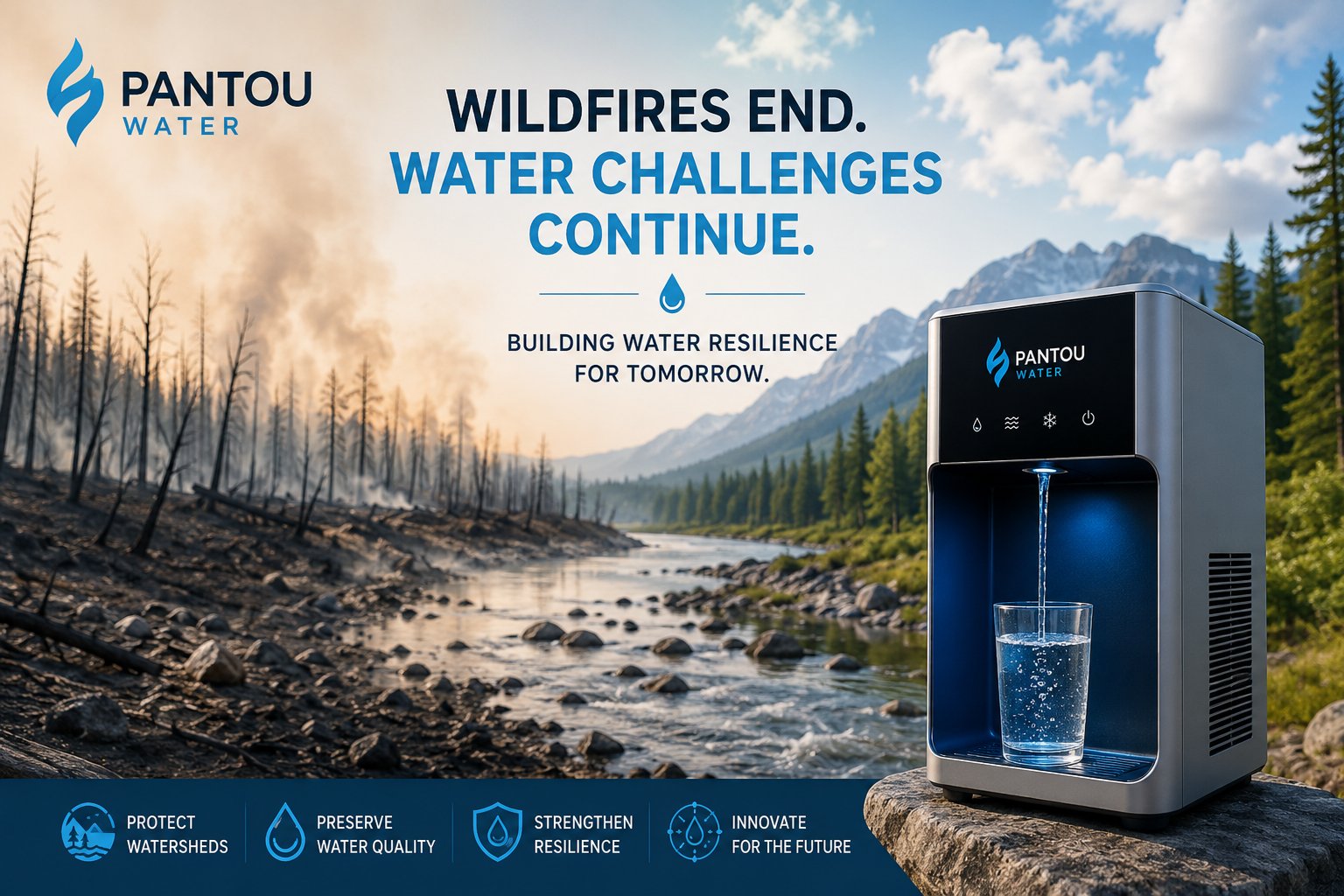
Wildfires are often described in terms of what they destroy: forests, homes, infrastructure, wildlife habitat, and livelihoods.
But the impact of a wildfire does not end when the flames are extinguished.
In many cases, another challenge begins shortly afterward—one that receives far less attention but can affect communities for months or even years:
the challenge of protecting water quality.
When fire moves through a watershed, it changes the landscape that collects, filters, and carries water. Vegetation disappears, soil structure changes, and ash and debris remain across large areas. When rainfall eventually arrives, these materials can be washed into rivers, reservoirs, lakes, and water-treatment systems.
The result can be a serious and long-lasting threat to drinking water security.
Wildfires Can Change an Entire Watershed
A healthy watershed plays an important role in maintaining water quality.
Trees, plants, roots, and natural soil layers help slow rainfall, reduce erosion, and filter water before it reaches rivers and reservoirs. After a severe wildfire, much of this natural protection may be lost.
Burned landscapes can become more vulnerable to:
- Soil erosion
- Flash flooding
- Sediment movement
- Ash runoff
- Landslides and debris flows
- Changes in surface-water chemistry
This means a wildfire can affect water sources far beyond the area where the fire was most visible.
A community may avoid direct fire damage but still face water-quality problems because its drinking water comes from a watershed that burned upstream.
What Happens When Rain Falls on Burned Land?
The first significant rainfall after a wildfire can be especially important.
Without vegetation to hold soil in place, rainwater can move rapidly across burned surfaces. Along the way, it can collect ash, fine sediment, organic material, metals, nutrients, and other contaminants.
This runoff may then enter:
- Rivers and streams
- Drinking-water reservoirs
- Lakes
- Groundwater recharge areas
- Municipal water intakes
In some cases, burned soil can also become water-repellent. Instead of absorbing rainfall, the ground allows water to flow quickly across the surface, increasing the risk of flooding and carrying more debris into nearby water systems.
These impacts can create sudden changes in water quality, especially after storms.
Why Ash and Sediment Matter
Ash may appear harmless once a wildfire is over, but it can significantly alter the quality of source water.
Depending on what burned, wildfire ash may contain a complex mixture of:
- Fine particles
- Organic compounds
- Nutrients
- Metals
- Construction-related contaminants
- Residues from vehicles, buildings, and household materials
Sediment creates another challenge. Large amounts of suspended material can make water highly turbid, reduce treatment efficiency, and increase the burden on filtration systems.
Water-treatment facilities are designed to manage variations in source water, but post-wildfire conditions can push systems beyond their normal operating range.
This may require additional treatment steps, more frequent maintenance, higher chemical use, and increased monitoring.
Water Quality Can Be Affected for Years
The most difficult aspect of post-wildfire water management is that the problem may not be temporary.
A burned watershed can remain unstable for several seasons. Each major rainfall or rapid snowmelt event may carry new sediment and contaminants into water sources.
Recovery depends on many factors, including:
- Fire severity
- Size of the burned area
- Type of vegetation
- Soil characteristics
- Slope and terrain
- Rainfall intensity
- Speed of ecological recovery
Some watersheds begin recovering relatively quickly. Others may continue affecting downstream water systems for years.
This is why wildfire recovery must include more than rebuilding roads, homes, and power infrastructure. It must also include long-term planning for water quality and water access.
Small and Remote Communities May Face Greater Risks
Large municipalities may have access to advanced treatment plants, multiple water sources, emergency response teams, and substantial financial reserves.
Smaller and remote communities often have fewer options.
They may depend on:
- One primary water source
- A small treatment facility
- Limited technical staff
- Seasonal roads
- Long-distance delivery of replacement water
- Bottled water during emergencies
If a wildfire affects the main source or treatment system, communities may quickly become dependent on transported water.
That creates additional costs, logistical challenges, plastic waste, and vulnerability to supply disruptions.
For communities already dealing with aging infrastructure or limited water access, wildfire impacts can intensify existing challenges.
Wildfires Can Also Damage Water Infrastructure
Water-quality problems do not come only from burned forests.
Wildfires can directly damage:
- Water-treatment facilities
- Pumps and electrical systems
- Distribution pipes
- Storage tanks
- Monitoring equipment
- Wells
- Intake structures
Heat can weaken components, while smoke, ash, and debris can contaminate exposed systems.
In developed areas, fires may also burn plastic pipes, building materials, fuel, vehicles, and industrial products. These materials can introduce additional contaminants into local water systems.
Following a wildfire, authorities may need to inspect, flush, test, repair, or replace parts of the system before water can be considered safe.
Climate Change Is Increasing the Need for Water Resilience
Wildfires are part of a broader climate-resilience challenge.
Hotter temperatures, prolonged drought, reduced soil moisture, and changing precipitation patterns can increase fire risk in many regions. At the same time, these conditions can place additional pressure on rivers, reservoirs, and groundwater supplies.
This creates a difficult cycle:
- Dry conditions increase wildfire risk.
- Wildfires damage watersheds and infrastructure.
- Rainfall carries ash and sediment into water sources.
- Treatment becomes more difficult and expensive.
- Communities face greater water insecurity.
Water planning must therefore consider not only everyday demand but also the increasing likelihood of extreme events.
Building More Resilient Water Systems
There is no single solution to post-wildfire water risk.
Resilience requires a combination of prevention, monitoring, infrastructure investment, emergency planning, and alternative water options.
Important measures may include:
Protecting Critical Watersheds
Reducing erosion, restoring vegetation, stabilizing slopes, and protecting water-intake areas can help reduce future contamination.
Expanding Water-Quality Monitoring
Real-time or frequent monitoring can help communities detect rapid changes in turbidity, chemistry, and contamination after fires and storms.
Strengthening Treatment Capacity
Treatment systems may need additional filtration, backup equipment, energy resilience, and emergency operating procedures.
Developing Backup Water Sources
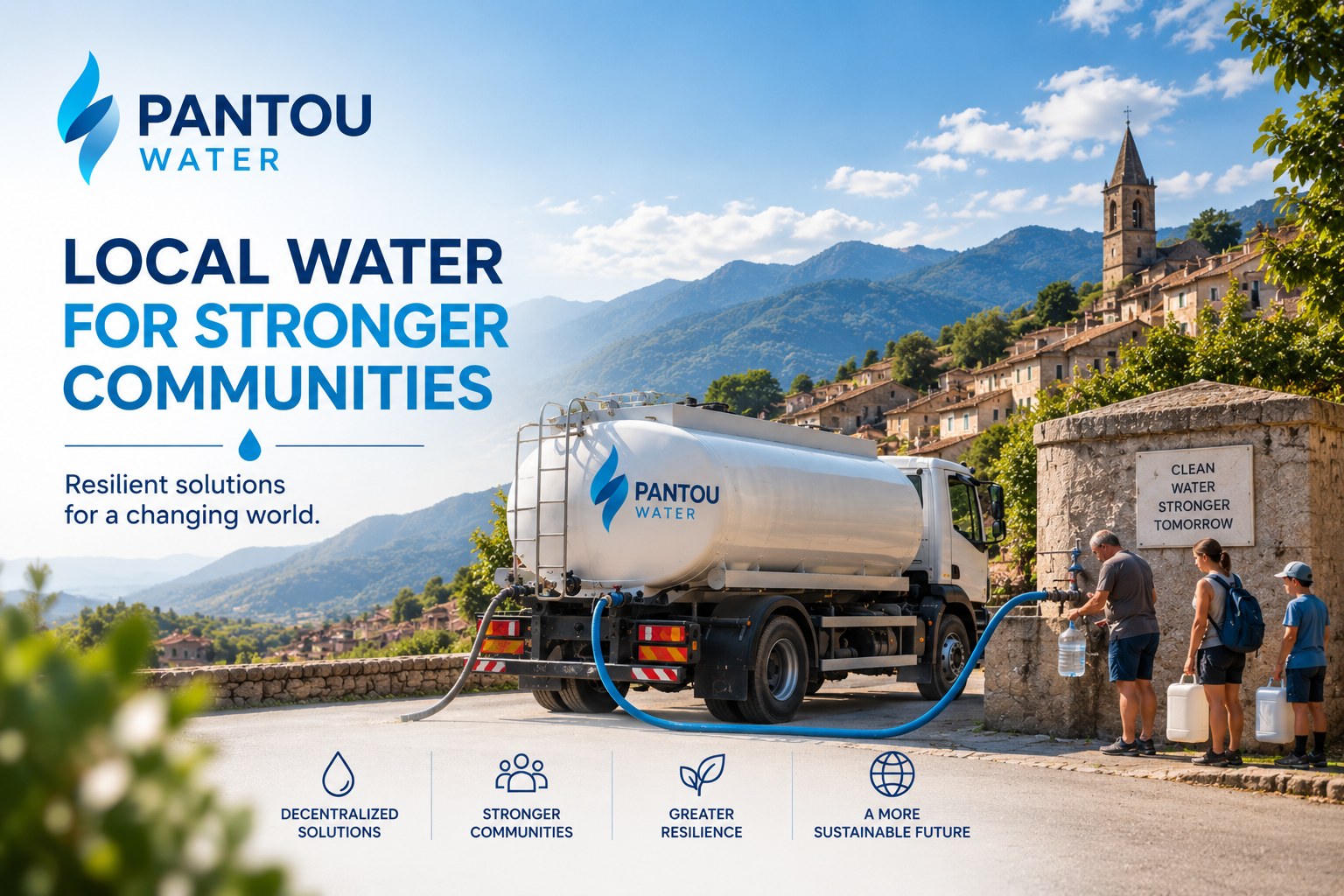
Communities that depend on only one source are especially vulnerable. Backup wells, storage, mobile treatment units, and decentralized systems can provide an additional layer of security.
Improving Emergency Coordination
Municipalities, Indigenous communities, utilities, public-health authorities, and emergency-response organizations need clear plans for testing, communication, and temporary water supply.
The Role of Decentralized Water Technologies
Traditional water infrastructure remains essential. However, climate-related emergencies are increasing interest in decentralized solutions that can operate closer to the point of use.
These may include:
- Mobile filtration systems
- Solar-powered purification units
- Local water-storage systems
- Rainwater harvesting
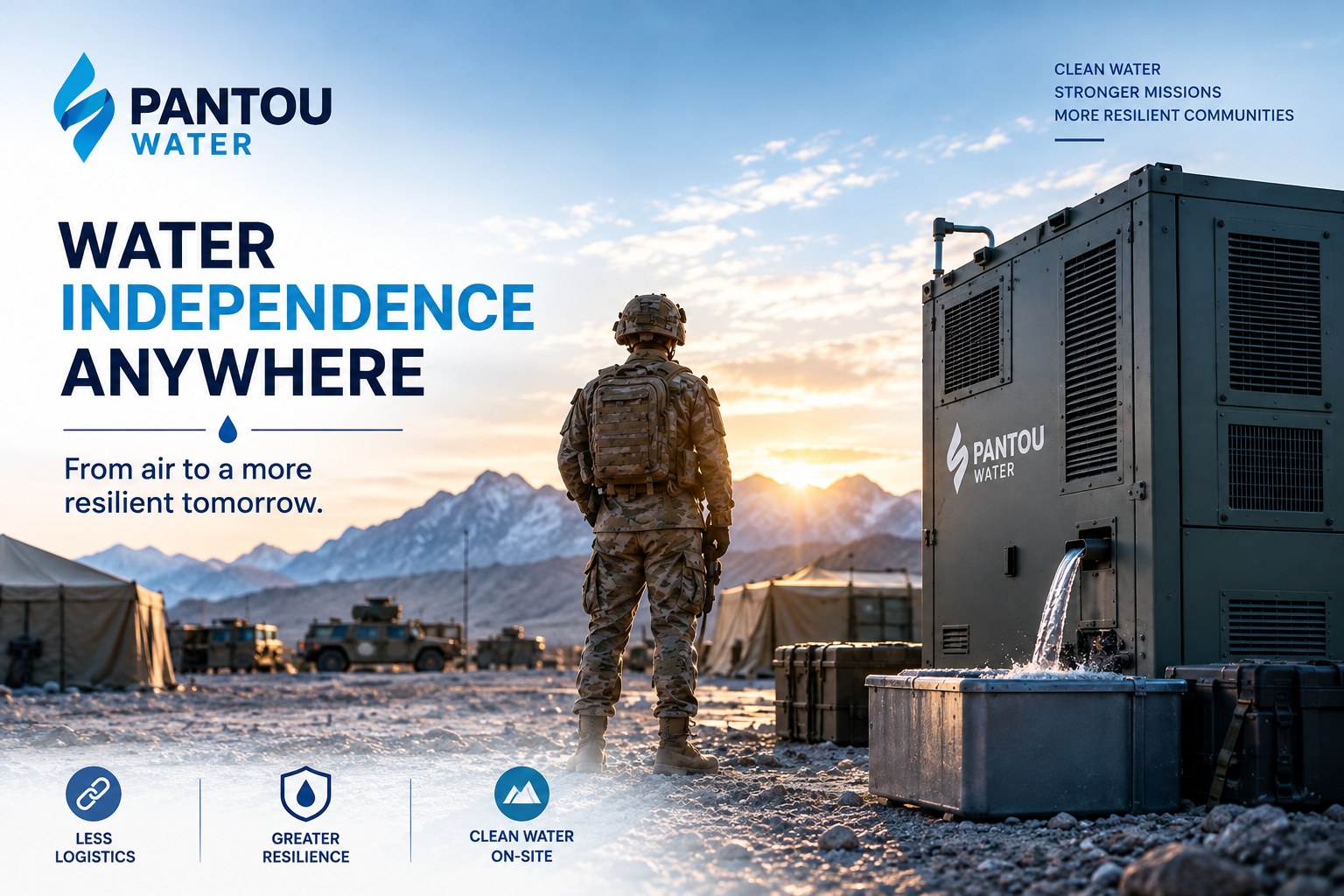
- Atmospheric Water Generators
Atmospheric Water Generation, or AWG, produces water from moisture in the air and treats it for use at the location where it is generated.
In post-disaster situations, decentralized water technologies may help support:
- Emergency shelters
- Community centres
- Temporary clinics
- Remote facilities
- Recovery teams
- Areas experiencing disrupted water deliveries
These systems should not be viewed as replacements for essential public infrastructure. Their value lies in providing an additional layer of resilience when conventional sources are compromised or temporarily unavailable.
Water Security Is About More Than Quantity
When discussing water security, the focus is often on whether enough water is available.
But quantity is only one part of the issue.
True water security also requires water to be:
- Safe
- Reliable
- Accessible
- Affordable
- Resilient during emergencies
A community may have a river, lake, or reservoir nearby and still face a drinking-water crisis if contamination makes that source difficult to treat.
Wildfires demonstrate this clearly.
They remind us that water availability and water quality are deeply connected—and that both can be affected by climate events.
Preparing Before the Next Fire
The best time to strengthen water resilience is before an emergency occurs.
Communities and organizations can begin by asking:
- Does our drinking water depend on a wildfire-prone watershed?
- What happens if our primary source becomes contaminated?
- How quickly can we test and communicate water-quality risks?
- Do we have sufficient emergency storage?
- Can our treatment system handle extreme sediment loads?
- What backup water options are available?
- How will remote or vulnerable residents receive safe water?
These questions are not only relevant to government agencies and utilities.
They also matter to hospitals, schools, industrial camps, tourism operators, emergency shelters, and remote facilities.
A More Resilient Water Future
Wildfires are visible disasters. Their impact on water is often less visible—but no less important.
The flames may disappear within days or weeks. The consequences for watersheds and drinking-water systems may remain much longer.
Addressing this challenge requires stronger infrastructure, better monitoring, smarter emergency planning, and innovative technologies that can help diversify water access.
At Pantou Water, we believe the future of water security will depend on building multiple layers of resilience.
That means protecting traditional water sources while also developing decentralized technologies that can support communities when existing systems are under pressure.
Because when a wildfire ends, recovery is only beginning—and safe water must remain at the centre of that recovery.
About Pantou Water
Pantou Water is developing energy-efficient atmospheric water generation technology designed to produce clean water from air humidity, including under challenging environmental conditions.
Our goal is to support stronger water resilience for remote communities, emergency-response operations, hospitality facilities, industrial sites, and off-grid applications.
Pantou Water — Clean Water. Independent. Sustainable. Secure.